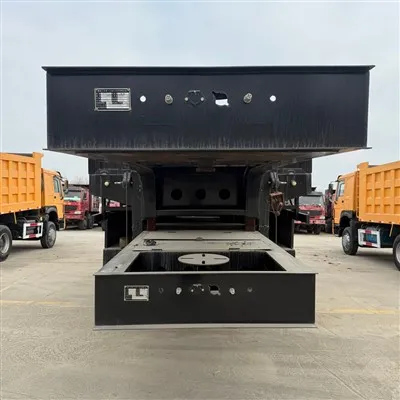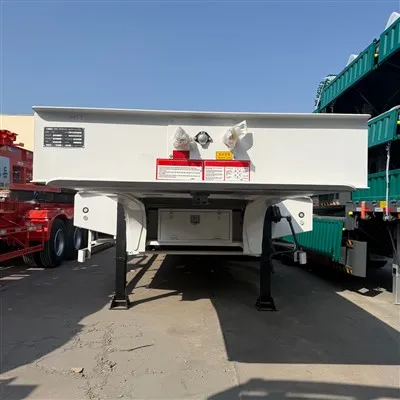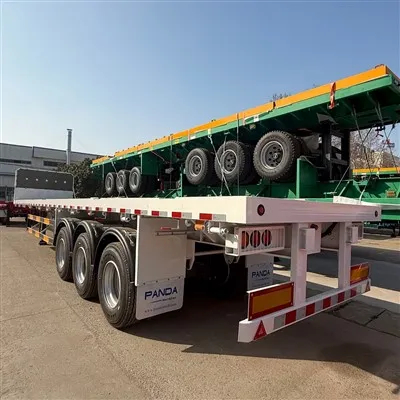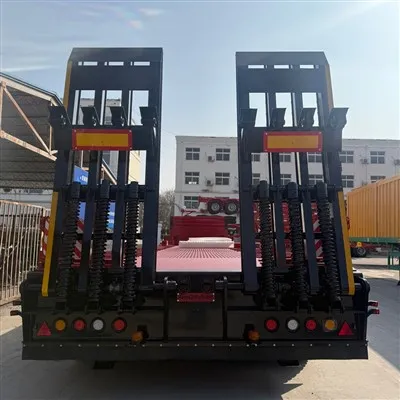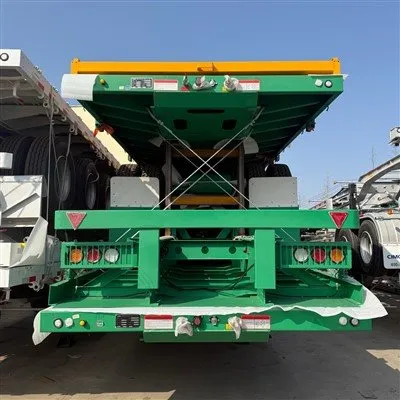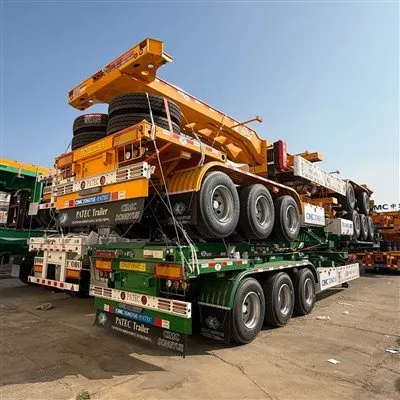
Trailers and semi-trailers are two common types of vehicles in the freight industry, playing a vital role in logistics and transportation. Although both fall under the general category of "trailers," there are distinct differences between them.
Definitions and Basic Characteristics
Trailer: A trailer is a vehicle that relies on a towing vehicle to provide motive power and does not possess its own independent propulsion system. It consists of a towing vehicle combined with one or more trailing units. There is a wide variety of trailer types, including semi-trailers, full trailers, and center-axle trailers.
Semi-trailer: A semi-trailer is a specific type of trailer in which the axles are positioned behind the vehicle's center of gravity, and which is equipped with a coupling device capable of transmitting both horizontal and vertical forces to the towing vehicle. Typically, the wheels of a semi-trailer are located at the rear of the cargo body; during transit, the front of the semi-trailer rests upon the fifth wheel (saddle) of the towing vehicle, which provides the motive power and bears a portion of the cargo body's weight.
Distinctions Between Trailers and Semi-trailers
Body Structure and Towing Method: The general category of "trailers" typically encompasses types such as full trailers and center-axle trailers, each featuring distinct body structures. In the case of a full trailer, the entire cargo load is borne independently by the trailer itself, which connects to the towing vehicle via a tow hook. A center-axle trailer, conversely, features axles positioned near the center of the cargo body and is unable to maintain its own balance independently once detached from the towing vehicle. In contrast, the body of a semi-trailer connects securely to the towing vehicle's fifth wheel via a kingpin, forming a rigid and stable coupling structure.
Cargo Capacity and Driving Stability: Given the wide variety of trailer types, their respective cargo capacities and driving stability characteristics vary depending on the specific model. Full trailers, by virtue of their independent load-bearing body structure, offer advantages in terms of cargo volume and are well-suited for transporting bulky yet relatively lightweight goods. Semi-trailers, on the other hand, are better suited for transporting large, heavy cargo-such as heavy machinery or shipping containers. Regarding driving stability, the tight coupling between a semi-trailer and its towing vehicle-combined with a lower overall center of gravity-enables the trailer to track the towing vehicle's path more accurately, thereby minimizing the risk of swaying or lateral tilting.
Usage Scenarios and Difficulty of Reversing: Differences also exist between trailers and semi-trailers regarding their typical usage scenarios. Full trailers are commonly utilized for short-to-medium-distance cargo transport-such as short-haul movements within or in the vicinity of construction sites and farms. Semi-trailers, conversely, are widely employed for long-distance freight hauling and the transport of oversized cargo. Regarding reversing operations, maneuvering a semi-trailer is relatively straightforward, as its steering action synchronizes effectively with that of the tractor unit. Reversing a full trailer, however, can be a more complex undertaking, requiring the driver to possess a higher level of driving proficiency.
In summary, while both full trailers and semi-trailers serve as indispensable tools within the freight industry, they exhibit significant differences in terms of body structure, towing mechanisms, cargo capacity, driving stability, and operational contexts. Therefore, when selecting the appropriate type of trailer for cargo transport, a comprehensive assessment based on actual requirements and specific operating conditions is essential.