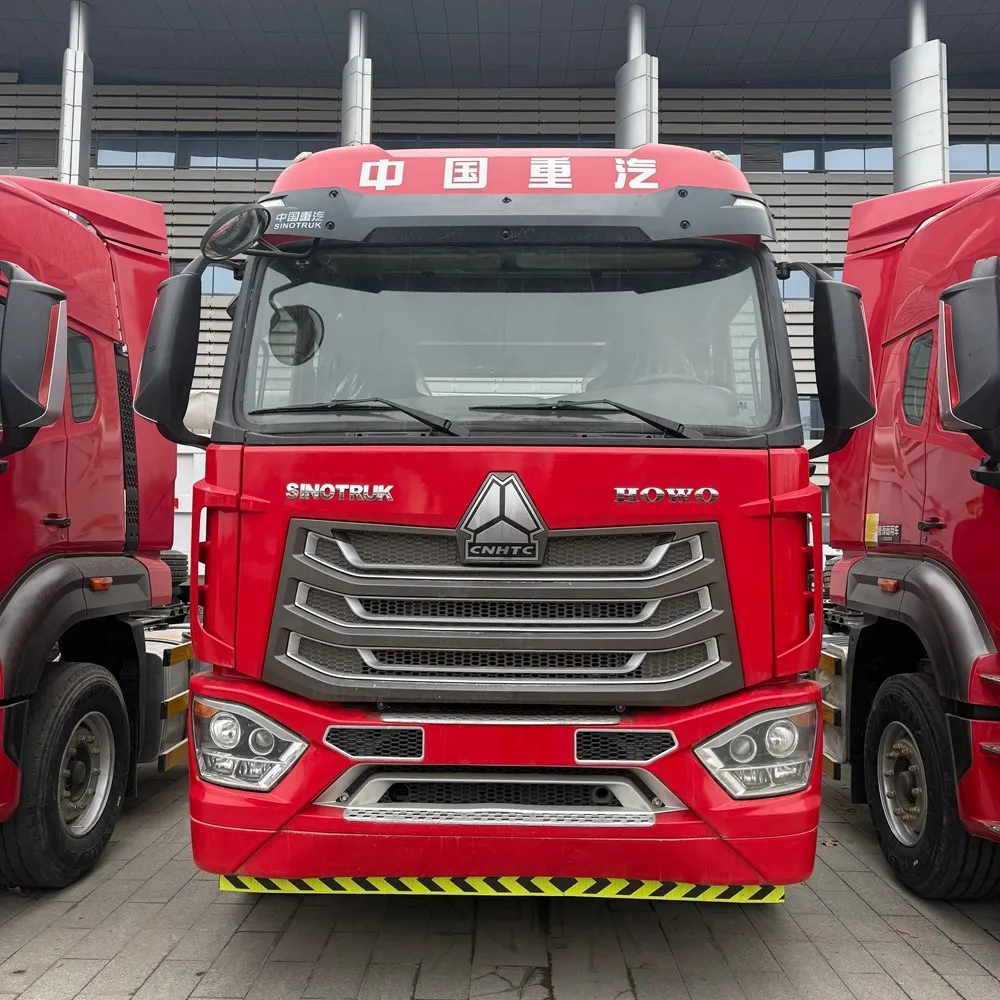
What is a Tractor Unit?
A tractor unit acts as the "strongman" of the industrial world, specialized in towing heavy equipment or cargo. Unlike standard trucks, it typically lacks a cargo bed of its own; instead, it connects to trailers or flatbeds via robust coupling mechanisms (such as fifth wheels or hooks)-much like a locomotive pulling train cars-to execute transport tasks. These vehicles are commonly found in environments requiring the frequent relocation of heavy loads, such as seaports and logistics parks.
The Three Core Strengths of a Tractor Unit
Superb Power: Equipped with high-torque diesel engines, capable of effortlessly towing hundreds of tons of cargo.
Agile Steering: Features a short wheelbase design combined with a hydraulic steering system, allowing it to maneuver and turn nimbly even within confined spaces.
Versatile Connectivity: Utilizes standardized coupling mechanisms that allow for rapid adaptation to various types of trailers-offering the flexibility to mix and match components just like building with LEGO bricks.
Why Are Businesses Indispensable Without It?
At container terminals, a single tractor unit can complete over 50 short-haul transport runs per day-achieving an efficiency level 20 times greater than that of manual handling. Its modular design allows the transport unit to be decoupled at any moment, eliminating wait times during loading and unloading-much like the seamless, efficient coordination between a waiter and a chef in a busy restaurant. From steel mills to wind turbine transport operations, these "unsung workhorses" quietly underpin the entire modern logistics ecosystem.